Understanding Marsh Food Webs: From Detritus to Herons
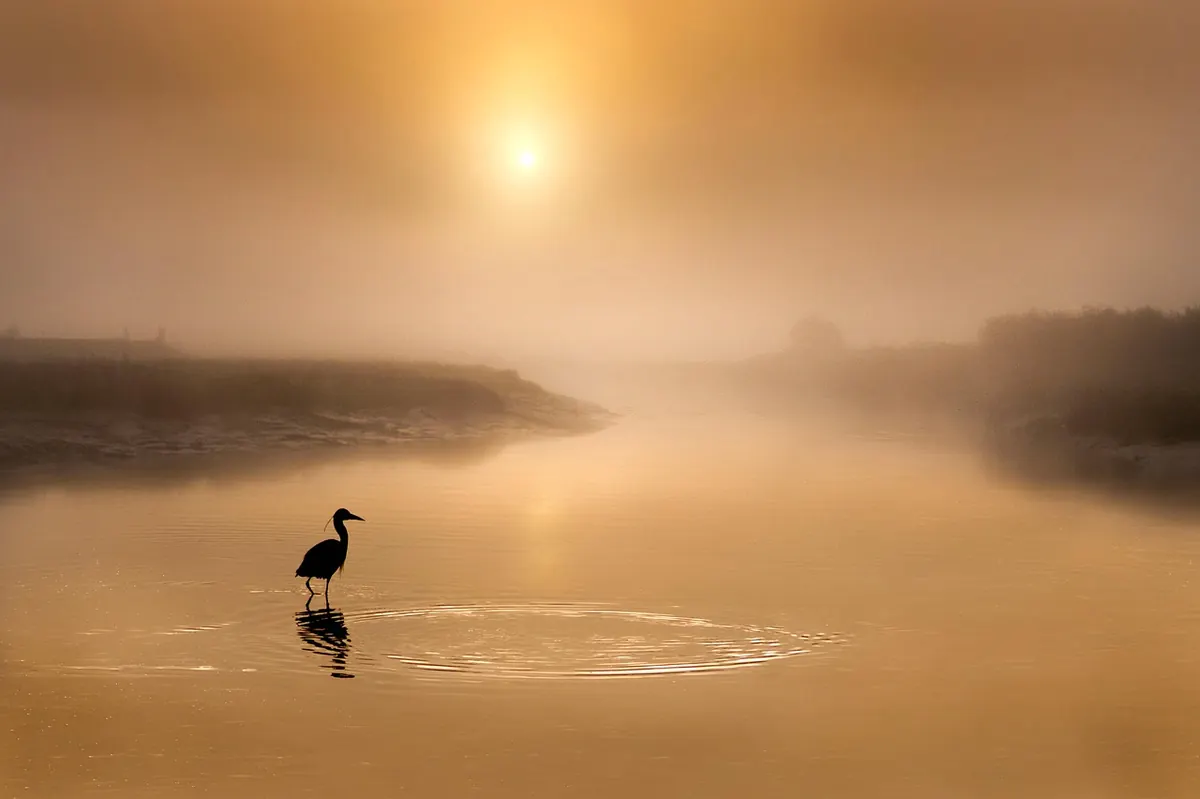
A reedbed on a still evening looks about as lifeless as a landscape gets. Green stems, brown water, a grey heron standing at the far edge like a badly placed ornament. The stillness is misleading. In a marsh, very little of the plant growth is eaten while it is alive. Most of it dies, falls into the water, and enters the food web from underneath. That single fact shapes everything else: which insects thrive, which birds can nest, and why a marsh with clear water and half a metre of soft mud can support more animal life than a tidy pond with a manicured edge.
Detritus is the real first course
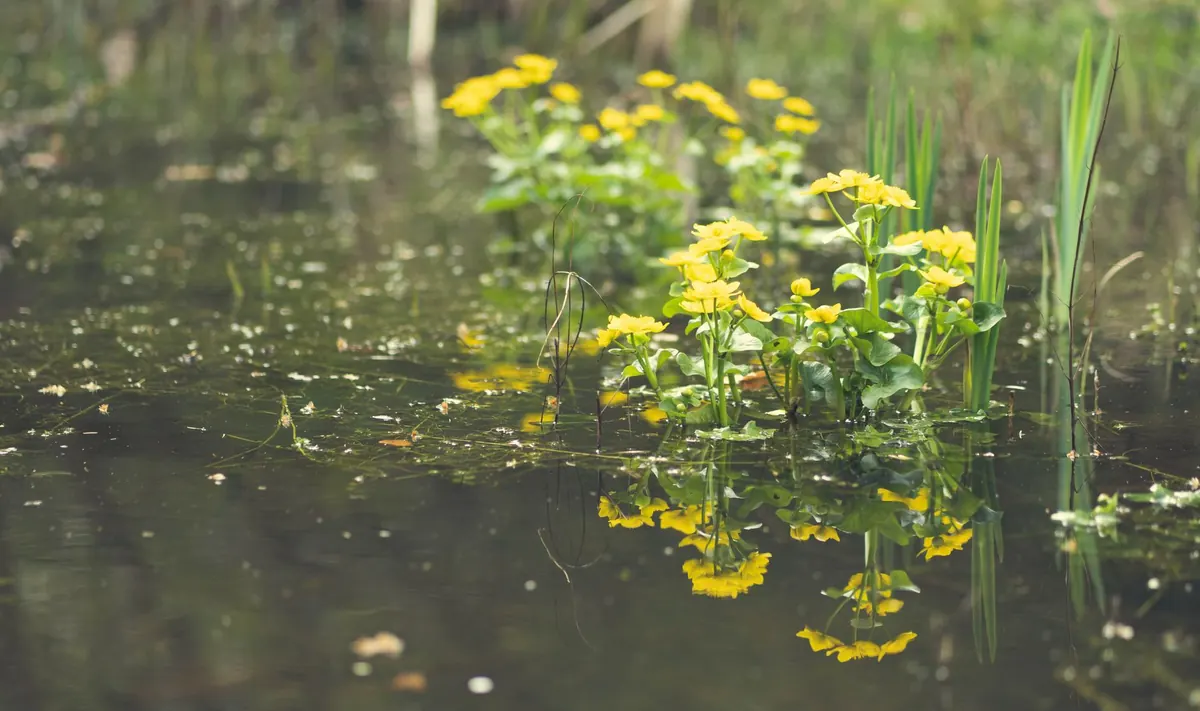
On a farm, the chain starts with living grass and a grazing animal. In a marsh, it starts with dead material. Reed, sedge, rush and willow leaves collapse into the water each autumn, along with algae and the fine film of microbes that coats every submerged stem. Fungi and bacteria get to work first, softening the tissue and loading it with protein. Ecologists call this conditioning, and it matters: an unconditioned reed leaf is poor food, while a well-colonised one is worth eating.
Because marsh soils are waterlogged, oxygen runs out quickly a few centimetres down. Decomposition slows, and part of it continues without oxygen, producing the sour, sulphurous smell you notice when you push a stick into black mud. That slow decay is why marshes accumulate peat rather than rotting away to nothing, and it is why so much carbon sits locked in them.
Who actually eats the dead stuff
The animals that make their living from detritus are the least glamorous creatures on the reserve, and the most important. They fall into rough groups:
- Shredders — caddisfly larvae, freshwater shrimp such as Gammarus, water slaters and cranefly larvae. They chew coarse leaves into smaller fragments.
- Collectors — non-biting midge larvae, aquatic worms and pea mussels, which sieve fine particles from the water and from the mud surface.
- Grazers — mayfly nymphs and water snails, scraping algae and bacteria off stones, stems and each other.
- Decomposers — the bacteria and fungi doing the invisible chemistry that makes the rest possible.
A healthy marsh is not one with crystal-clear water and a bare bottom. It is one with a generous litter layer, plenty of submerged stems, and a warm, shallow margin where all of this can happen quickly.
Insects: where the web becomes visible
Stand at the edge of a ditch in June and the middle of the web announces itself. Chironomids rise in columns, mosquitoes and mayflies lift off the surface, and damselflies and dragonflies clatter through the reeds hunting them. The larvae below are prey for almost everything with a mouth, which is precisely why they are so numerous.
Emergence also exports energy out of the marsh. Adult midges, caddisflies and mayflies drift over hedges and into woodland, where bats, swallows and house martins take them. A reedbed feeds the fields around it, whether or not anyone notices.
The ladder inside a single ditch
Predation runs in steps. Damselfly larvae catch midge larvae. Dragonfly larvae, which can take two years to mature, then catch damselfly larvae, water fleas, tadpoles and small fish. Bigger larvae eat smaller ones, and the whole arrangement reshuffles as water levels drop and the ditch shrinks in summer.
Amphibians and fish: the cold-blooded middle
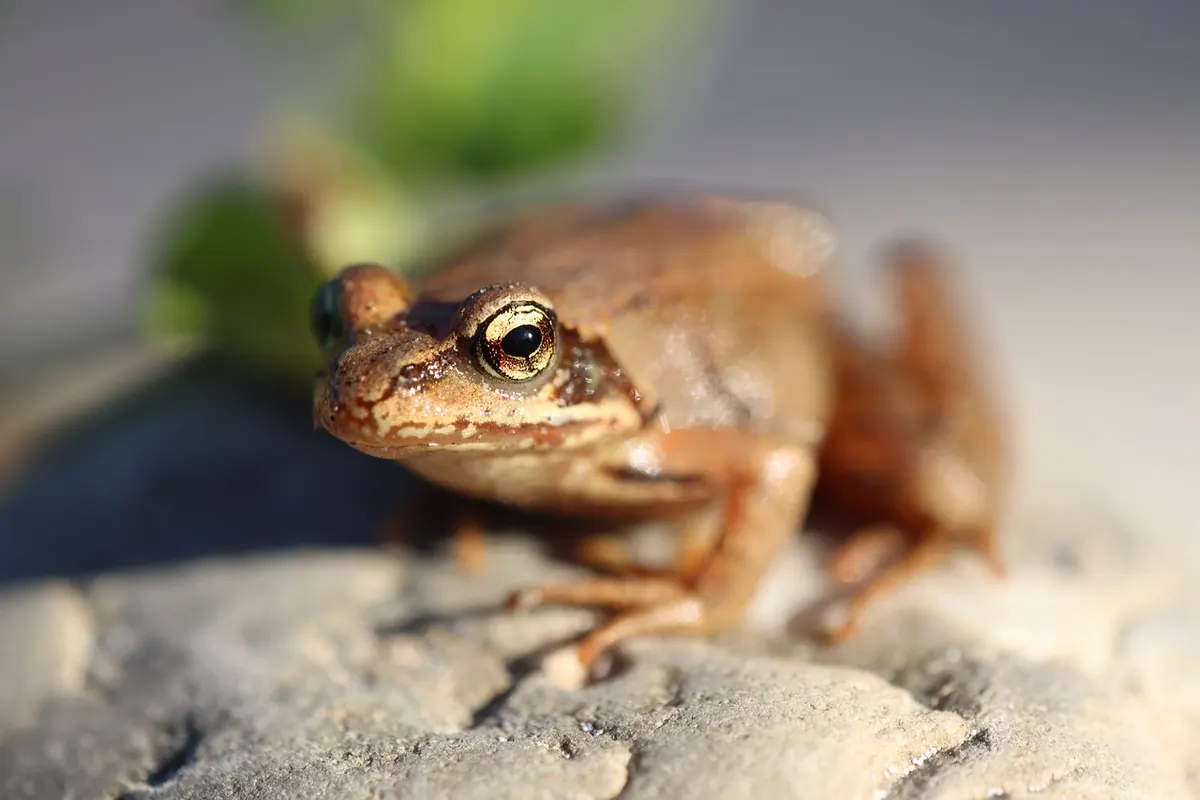
Frogs, toads and newts sit squarely in the middle of the web, eating invertebrates and being eaten in turn. Common frogs spawn early in the warmest, shallowest corners, and their tadpoles graze algae and detritus before they become protein for herons, grass snakes and dragonfly larvae. Smooth and palmate newts work the leaf litter at night, taking insect larvae, worms and frog spawn.
Fish change the picture. In marshes with permanent water, sticklebacks, rudd and eels thrive, and pike in larger dykes will take almost anything they can fit in their mouths. Where pools dry out each summer, fish cannot persist, and the marsh leans towards invertebrates and amphibians instead. Neither state is better; they simply support different birds.
Herons, harriers and otters
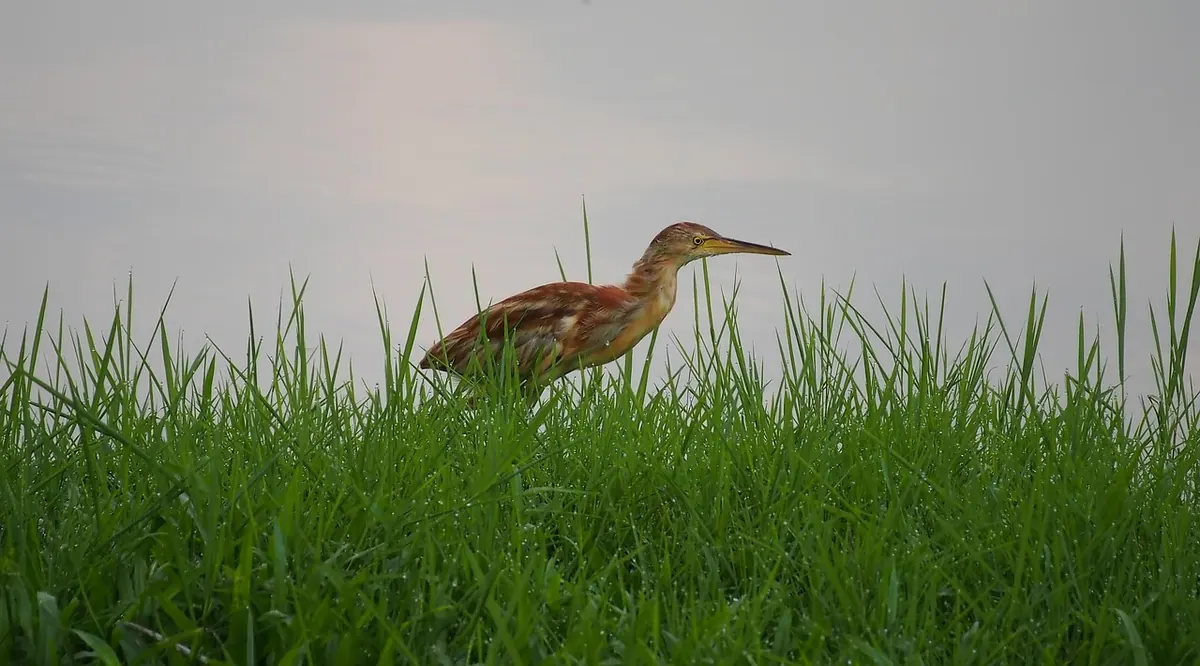
Top predators are the easiest part of the web to watch and the hardest to maintain. The grey heron needs shallow water with a soft edge, where it can stand and wait. The bittern, a reedbed specialist, needs fish and eels in dense cover. Marsh harriers quarter the reeds for frogs and young waterfowl, barn owls hunt the rough grass margins, and otters and water shrews take fish and invertebrates in the ditches.
These species need every layer below them to be working. Fat-soluble pollutants also concentrate as they move up the chain, which is one reason predators are such useful indicators: a marsh that cannot raise a heron is usually telling you something about the mud, the water quality or the insects that are missing.
How to follow the web yourself
You do not need a licence or a laboratory. A white tray, a small net and half an hour will do.
- Choose a shallow margin with dead leaves and stems, not open water. That is where the action is.
- Dip gently, tip the contents into the tray with a little water, and let it settle before you look.
- Sort what you see: shredders are usually shrimp-like and fast, collectors are small and wriggly, grazers cling to stems.
- Return everything to the same spot within a few minutes, out of direct sun.
- Visit the same place at dusk to see adults emerging, and check stems and spider webs at dawn for the ones that got caught.
- Note what is feeding: a heron's stance, otter spraints on a tussock, a dragonfly with something in its jaws.
Great crested newts and some other marsh species are protected, so look rather than handle, and clean and dry your kit between sites to avoid moving disease or invasive plants around.
Protecting the bottom of the chain
If you manage a pond, a wet corner of a garden or a stretch of ditch, the practical lesson is to look after the mud and the litter. Leave marginal vegetation standing over winter so stems and leaves fall in. Keep at least one shallow, sunlit edge rather than digging everything to a uniform depth. Avoid dredging more than you must, and never spray insecticides near water. Watch nutrients too: fertiliser and runoff push a marsh towards algal blooms and away from the detrital web, and the invertebrates that feed the frogs, fish and herons thin out with it.
Get the dead stuff right — the rot, the shredders, the midges making their slow climb out of the water — and the heron will keep turning up on its own.
Photo: Adriansart / Pixabay